
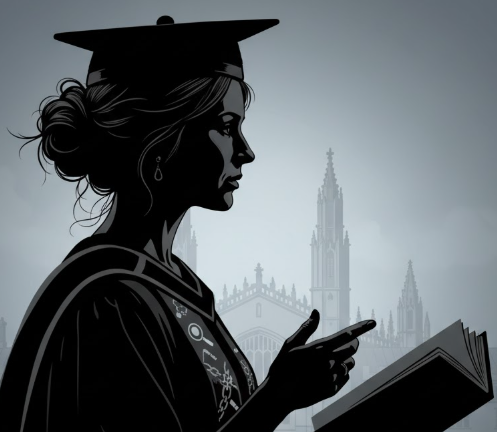
Professor Philippa Whitcombe, OBE
Professor Philippa Whitcombe is one of the most unusual people in this world. She is is considered the world's foremost expert on the criminology and scientific methods of Sherlock Holmes. Her two textbooks (Deductive Criminology: Scientific Principles and Reasoning in Crime Investigation and Forensic Deduction: Scientific Approaches to Crime Solving and Evidence Analysis) based on Holmes' methods are required reading in all eight Ivy League schools, Cambridge, Oxford as well as Imperial College London, and more than 1,000 higher-education institutions worldwide.
She is also considered a top authority on the lives of Holmes and Watson, although some of her speculations have been widely disputed. (For instance, she has stated that both Holmes and Watson died under mysterious circumstances in May 1940, when the surrender of France was imminent during World War II. Winston Churchill, who became prime minister on May 10, ordered their deaths, fearing it would be a fatal blow to the already-low British morale.)
I first saw Professor Whitcombe in the spring of 2008, when I worked as an editor at Bloomberg News in London. Our office was in Finsbury Square. On quiet days in the newsroom, I liked to take a break and wander the neighborhood. As an American, I loved soaking in the atmosphere and history of the city.
Not far from Finsbury Square is Bunhill Fields Burial Ground, an historic cemetery where such figures as Daniel Defoe and William Blake are buried. I sometimes enjoyed the quiet there, and one day as I walked among the graves I spotted a woman examining one ancient gravestone with an oversized magnifying glass. The next day, she was examining a different one.
On the third day, however, when I entered the grounds she stood just inside the entrance, as if she were waiting for me.
“Mr. Bruce Rule, Bloomberg News editor from 18 The Chase, Bromley, why are you spying on me?”
I sputtered I hadn’t been.
“I could have your work visa revoked by nightfall and you and your family on a plane out of this country by midnight.”
I swore I was not spying on her. She studied my face for a long moment, then nodded and said, “Fine.” She turned and walked off without another word.
A bit unsettling, to be sure, but I had all but forgotten the encounter until three years ago when I heard a knock on my door in Lewes, Delaware.
When I opened it, the professor brushed past me, saying she knew we only had 45 minutes before my wife was due home and she needed to speak to me on a confidential matter.
After roaming through my house to confirm no one else was there, she sat at my dining room table and pulled out a stack of paper that looked dusty and yellowed.
“I have authenticated that this is an original manuscript written by Dr. John Watson in late 1905 detailing a trip that Sherlock Holmes and he made to the United States. It needs to be published.”
I told her that she would be better off going to a publisher herself, or a literary agent. That’s when she finally told me that she was Philippa Whitcombe. I knew the name, since my college roommate was a Criminal Justice major and was assigned her textbooks.
“Then you also know that I am rather controversial for some of the things I have written. That is why I need a front. There is no connection between us.” She slammed her palm down on the manuscript. “And this needs to be published!”
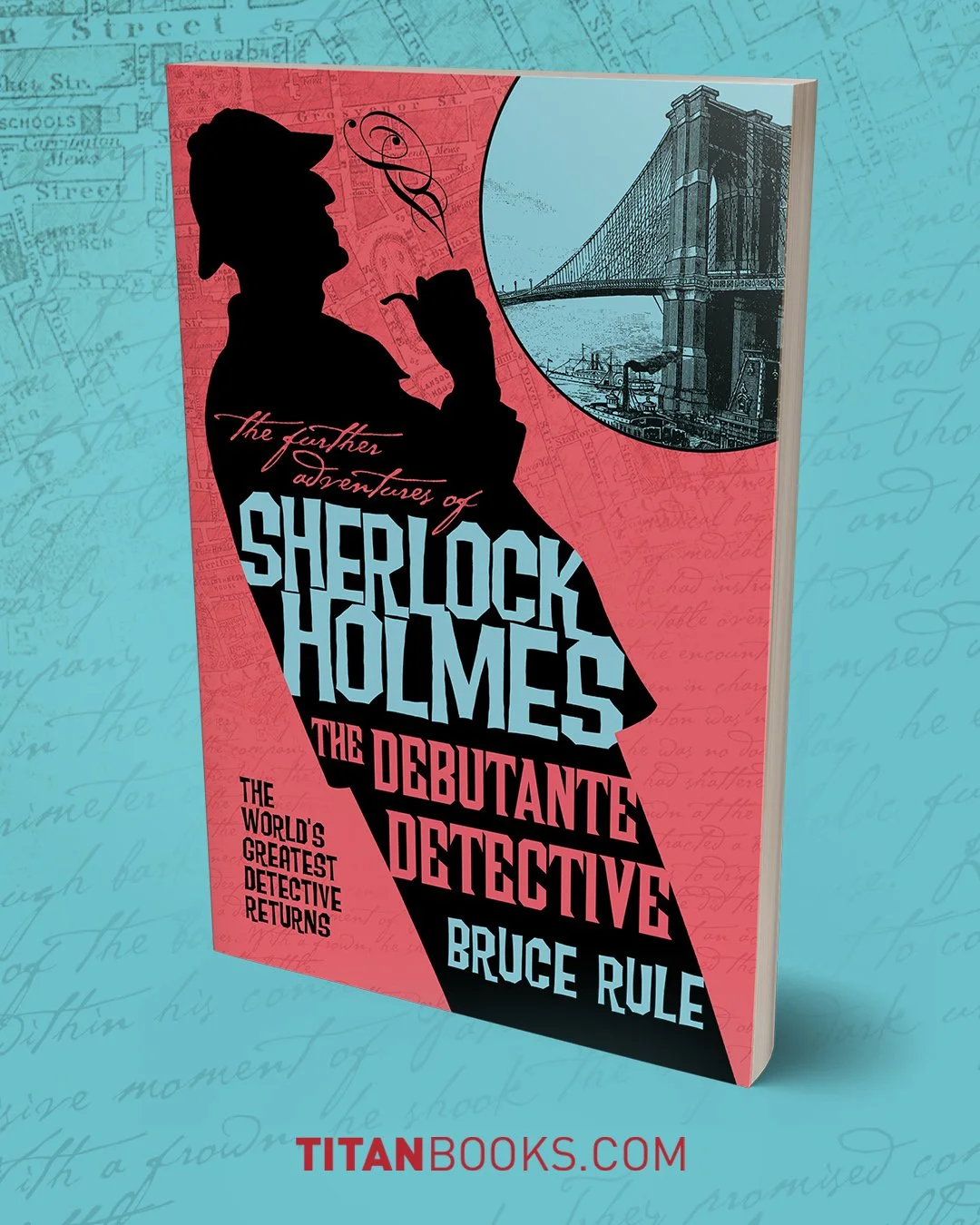
That was the start of our working relationship. Over the next few months, I retyped Watson’s manuscript, checking with her on some minor points and correcting Watson’s misspellings and grammar, then pitching the book to agents and publishers until Titan Books offered to publish it as part of its Sherlock Holmes series. (As part of the contract Titan renamed the story “The Debutante Detective” from Watson’s “The Adventure of the Half-Moon.”)
In exchange for agreeing to front for her, I made the professor promise that I could make her connection to the manuscript known once the book was accepted and the publishing process far enough along that Titan wouldn’t pull out. She agreed only to a series of short posts that I could include in my newsletter. No personal appearances, and her name could not appear on or in the book. Also, she refused to allow a photograph of her., which is why I am using the computer-generated avatar on this page.
(After some digging, I have found that she is notoriously camera-shy. Only a few blurry or faded photos of her from childhood are known, and she looks nothing like she did back then. The classes she teaches at Oxford are remote and her face is in shadow. Various online forums focused on Holmes speculate that her privacy comes from aiding MI5, the British domestic intelligence service. Others have speculated that she is disfigured, and some nasty critics claim she is ugly or worse. I can definitely say she is not ugly. In fact, she has such a classic British beauty to her she could star in a Jane Austen movie. )
Over the next few months I will include posts from her in my monthly newsletter in which she will detail how she authenticated the manuscript. I think you will find it interesting.